
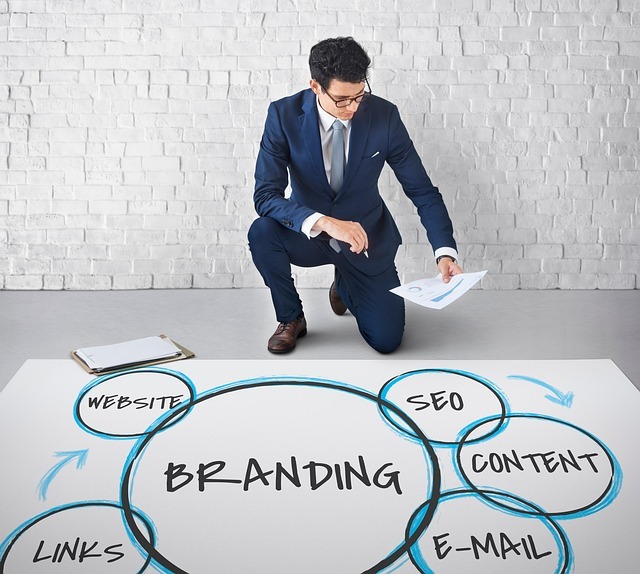
If you walked into a room and introduced yourself, people would see your clothes (your visuals) and hear your voice (your messaging). But the way they feel about you after you leave? The impression that lingers? That is your brand.
For a long time, there has been a misconception that “branding” is just a fancy word for picking a color palette and paying a graphic designer for a logo. While those things are important, they are merely the tip of the iceberg.
In today’s digital landscape—where AI can generate content in seconds and competition is fierce—branding is the only thing that cannot be automated. It is the human soul of your business.
The “Gut Feeling” Definition
“Your brand is what people say about you when you’re not in the room.” — Jeff Bezos
To strip away the corporate jargon, let’s look at what branding actually is in the modern era:
- It is a Promise: It tells the customer what they can expect from you, every single time.
- It is Emotional: It’s the difference between buying a coffee and buying a “Starbucks.” One is a beverage; the other is a ritual.
- It is Strategy: It is the deliberate effort to shape how the world perceives your business.
The Big Three: Clearing the Confusion
To build a great brand, you must distinguish between these three often-confused terms:
- Brand: The perception of the company in the eyes of the world.
- Brand Identity: The tangible elements (Logo, colors, typography, packaging).
- Branding: The active actions you take to build that image.
Why Branding Matters More Now Than Ever (For Humans & Algorithms)
Search engines (like Google) and Large Language Models (like ChatGPT) favor E-E-A-T: Experience, Expertise, Authoritativeness, and Trustworthiness. A strong brand signals all of these.
1. Trust is the New Currency
People don’t buy what you do; they buy why you do it. A consistent brand builds trust. When a customer sees your colors or hears your tone of voice, they should instantly feel safe. If your branding is chaotic, your business feels risky.
2. It Beats the “Race to the Bottom”
Without a brand, you are a commodity. Commodities compete on price. Brands compete on value.
- Commodity: “I sell white t-shirts for $5.”
- Brand: “I sell sustainably sourced, ultra-soft essentials for $40.”
- Result: The brand makes higher margins because they offer an identity, not just a product.
3. Employee Pride and Retention
Branding isn’t just external. A strong brand mission gives your team something to believe in. It turns employees into ambassadors who genuinely want to see the business succeed.
The 4 Pillars of a Humanized Brand Strategy
If you want to build a brand that resonates with real people, you need to look inward before you look outward.
I. Define Your “North Star” (Purpose)
Why does your business exist beyond making money?
- The Hero: Are you saving the day? (e.g., Cybersecurity firms)
- The Sage: Are you providing wisdom? (e.g., Consultancies)
- The Rebel: Are you disrupting the status quo? (e.g., Tech startups)Identify your archetype. This dictates your personality.
II. Know Your Audience Intimately
Stop targeting “Males, 25-40.” That is data, not a person.
Instead, target “Jason, 32, who is tired of corporate burnout and loves hiking on weekends.” When you speak to one person, you resonate with many.
III. Find Your Unique Voice
If you removed your logo from your website, would people know it’s you?
- Are you witty and sarcastic?
- Are you warm and nurturing?
- Are you authoritative and direct?Tip: Document this in a “Brand Voice Guide” to keep your content consistent across social media, emails, and blogs.
IV. Visual Consistency
The human brain processes images 60,000 times faster than text. Your visual identity serves as a mental shortcut.
- Stick to 2-3 primary fonts.
- Use a consistent color palette (colors evoke psychology—blue for trust, red for excitement).
- Ensure your imagery style (photos vs. illustrations) matches your vibe.
How to Audit Your Brand Today
You don’t need a million-dollar budget to refine your branding. Start with this simple checklist:
| Check | Element | Question to Ask |
| ⬜ | Social Media | Do my profile pictures, bios, and tone match across LinkedIn, Instagram, and X? |
| ⬜ | Website | Does the hero section clearly state who we help and how we help them? |
| ⬜ | Customer Service | Is the tone of our support emails consistent with our marketing voice? |
| ⬜ | The “Why” | Can every employee articulate the company mission in one sentence? |
1. What is the difference between marketing and branding?
Think of it this way: Branding is your identity, while marketing is your tactic. Branding defines who you are, what you stand for, and why you exist. Marketing is the specific set of tools and actions (like ads, SEO, or emails) used to promote that identity to the world. Branding pulls people in; marketing pushes your message out.
2. How much should a small business budget for branding?
There is no one-size-fits-all number, but a general rule of thumb is to view branding as an investment, not an expense. For startups, allocating 5-15% of your initial budget toward establishing a visual identity and strategy is common. However, you can start small with a DIY strategy (focusing on consistency and voice) and invest in professional design as you scale.
3. How often should a company rebrand?
You shouldn’t rebrand just because you are bored with your logo. A rebrand is necessary when:
- Your business model or target audience has significantly changed.
- Your current brand feels outdated or “stuck” in a past decade.
- You are merging with another company. On average, companies might do a “brand refresh” (minor updates) every 3-5 years and a full rebrand every 7-10 years.
4. Can I build a brand without a logo?
Technically, no, because visual recognition is a core part of branding. However, you can build a brand reputation before you have a polished logo. If you deliver exceptional service and have a distinct personality, you are building a brand. That said, a professional logo is eventually required to anchor that reputation visually in the customer’s mind.
5. What is “Personal Branding” and do I need it?
Personal branding is the practice of marketing yourself and your career as a brand. Even if you work for a company, having a strong personal brand (on platforms like LinkedIn) establishes you as an industry thought leader. In the modern economy, people trust people more than faceless corporations, so a founder or employee with a strong personal brand can significantly boost the company’s credibility.
Final Thoughts: The Long Game
Branding is not a sprint; it is a marathon. It is the cumulative result of a thousand small interactions. It’s the way you handle a complaint, the quality of your packaging, and the helpfulness of your blog posts.
In an age of automation, being distinctly human is your greatest competitive advantage. Build a brand that has a heartbeat, and the market will reward you.